Leaving Space Behind Moving Subjects – Composition
When photographing a moving subject the generally acceptable compositional rule is to place the subject in the frame with space in front of it to give it room to move into (creating ‘active space‘).
This is said to give the image more balance and provides the viewer of the image an answer to the question ‘where is the subject going?’
However rules are meant to be broken and as with every rule there are times when it can be very effective to break this one also.
1. Focal Points in the Wake
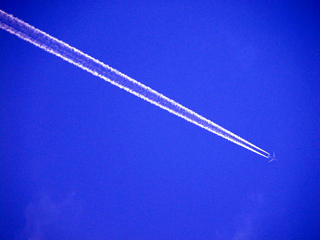
An ideal time to break this ‘rule’ is where the subject leaves something in their wake – Some moving subjects create a disturbance behind them in their environment that actually provides an image with a focal point that is worth including.
For example – the wake behind a surfer, the lingering vapor trails in a blue sky after a jet liner flies over, the clouds of dust after a rally car etc
In each of these cases the real action is happening behind your subject and to leave it out misses an opportunity.
Here some examples:
2. Conveying Speed
You might also like to break this rule when you want to accentuate the speed of your subject as placing your subject at the edge of your frame in this way can convey that they are moving so quickly that you can hardly keep up with them.
3. Showing the Journey
Lastly this rule is great for breaking when you want to convey something of the journey that the subject has already been on rather than where they are going.






20 Responses to “Leaving Space Behind Moving Subjects – Composition” - Add Yours
March 5th, 2008 at 4:51 pm
Someone once told me that I should have composed this photo more traditionally, while I argued the wake balances the shot:
http://flickr.com/photos/e-pics/1035953650/
Everyone says it, but rules really are meant to be broken.
March 5th, 2008 at 5:50 pm
Very nice, simple write up. Great example shots, too.
March 5th, 2008 at 7:48 pm
very lucid explanation, and examples thus illustrating the theory are great !!
March 5th, 2008 at 8:18 pm
Very informative.
March 5th, 2008 at 10:13 pm
Very very good information… as usual!
This site is awesome, thanks!
Shawn
March 6th, 2008 at 12:10 am
Great ideas!! great pics to illustrate also.
March 6th, 2008 at 1:17 am
Great ideas. I liked the idea of showing the journey the most.
March 6th, 2008 at 1:23 am
Thanks for the tips on this. I love that dog running photo – and how you described the fact it looks like “you can’t keep up with them.”. Totally helpful.
March 6th, 2008 at 2:03 am
I love the “rules”, but I love knowing when to break them even more. These kinds of articles help me to be so much more creative and to claw my way out of my nice neat (albeit boring) little rules box.
March 6th, 2008 at 3:49 am
I want to try some of these shots :)
March 6th, 2008 at 4:23 am
Great post! i learn the rules… then how to break them!
March 7th, 2008 at 1:45 am
Levi… your argument of “balance” could be loosely interpreted, so I’ll take a stab with my interpretation of the composition. I don’t see it in terms of “the wake on this side of the frame balances out the action on the other side of the frame,” but I do see it as showing where the action started, and the model being ejected continues the story in the same frame, showing the direction of the action and leaving to the imagination the result of the turbulent spill. I love this shot. It’s an entire storyline, and because of that I agree much would have been lost if it had been composed traditionally. Good job, and thanks for sharing!
March 7th, 2008 at 6:13 am
Amazing photos! thanks for the article
March 7th, 2008 at 4:07 pm
I’m currently experimenting with action photography so this post is very timely
Thanks
PS great choice of pics
March 7th, 2008 at 7:02 pm
Interesting and very informative tutorial. I just wonder though how many Camera Club Judges will agree with or even accept your comments.
March 8th, 2008 at 11:58 am
Wait! No one told me there were rules…lol. Photography is an art form. If there is a way to break away from the norm GO THERE. Beautiful example pictures. Great suggestions. Thanks.
March 8th, 2008 at 5:37 pm
Interesting article. Even if it’s a great idea to leave the subject in front of the space, some pictures seem unbalanced, like the running dog. I think it is important to have a trail of feeling of a trail behind the subject. Otherwise the subject is tipping the image to one side.
March 9th, 2008 at 9:17 am
nicely taken keep it up
March 5th, 2009 at 4:05 pm
very useful tips!
September 15th, 2009 at 7:53 pm
thanks for those tips….
i realy gonna try out some tips …..
amazing…..
thanks
Leave a Reply