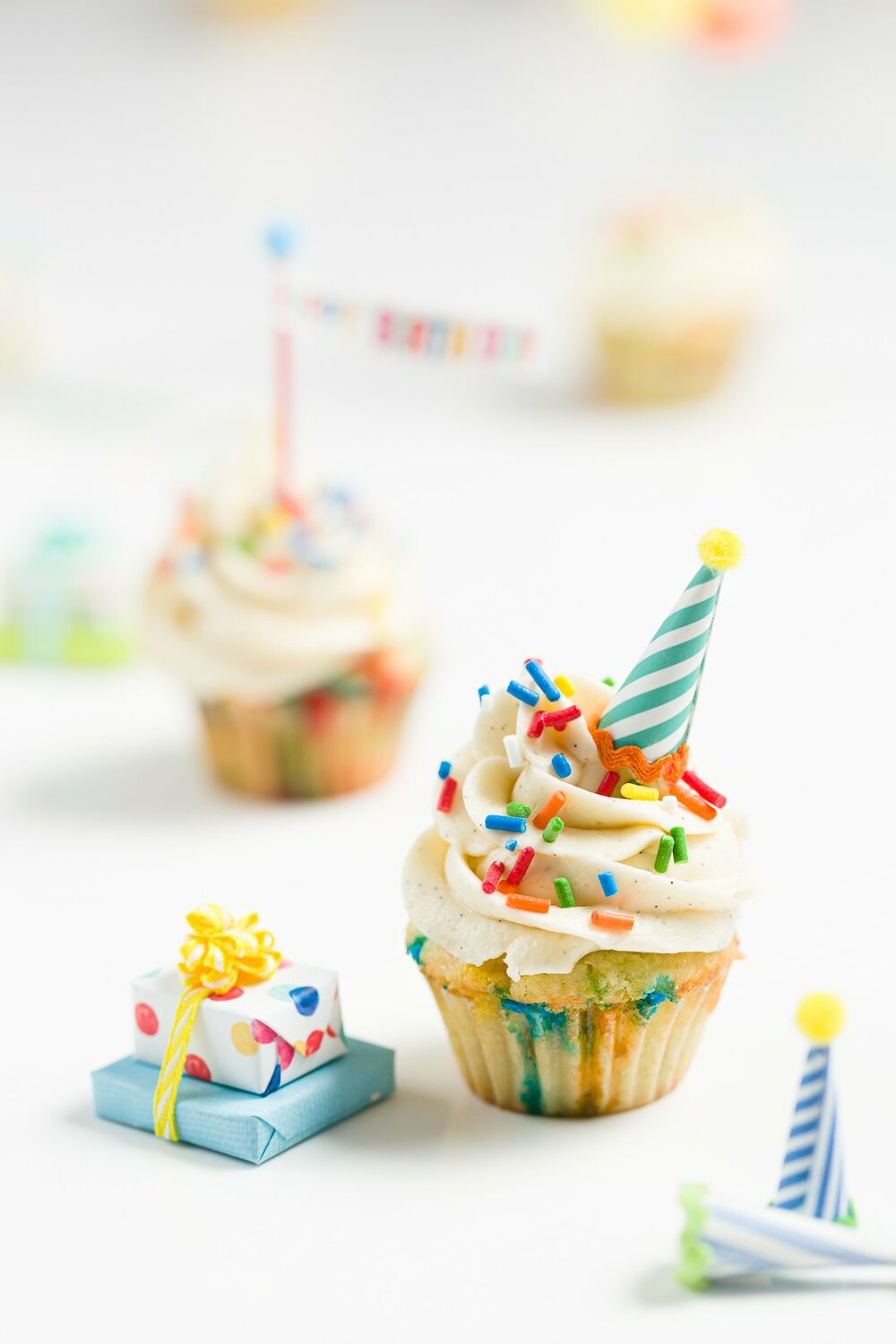
Food Photography Techniques and Tips
Today food photographer Jonathan Pollack shares some wonderful food photography tips (and some positively mouth watering photos. Also check out our previous Food Photography Tips..
The food photography techniques in this post are ones that I use in photos I take for both a local food magazine and my wife’s cupcake blog. I’ve broken these techniques down into a few areas that give some ideas and suggestions to help you photograph and showcase your food.
Styling Your Food for Photography
I’ve never had the luxury of working with a food stylist; if you aren’t well-known, you will most likely take on this role yourself. While I lack the massive collection of props that a professional stylist would own, I do have at my disposal some place settings, backgrounds, and typically some degree of control over how food is presented. I don’t tend to use stand-ins or other tricks to get the results that I want, but remember that those are available if you need them. Whether I am at home or out shooting at restaurants, I am always challenged to use my on-hand supplies and creativity to create the right mood and draw the viewer in without distracting them. Getting started in styling food is not as difficult as you might think:
- Place solid or simple patterned papers (available at a scrapbooking store) as a background. Figure out what works and does not work in terms of contrast and similarity. Also, make sure that you have enough paper to completely cover the entire field of view.
- Experiment with incorporating serving pieces, whole place settings, napkins, placemats, and tablecloths. Set the table with silverware, drinks, and even candles to convey the right mood. If you’re budget-conscious, you can always find these items at thrift and resale stores, flea markets, and garage sales.
- If you have multiple food subjects available to you (like two dozen cupcakes from which to choose), use only the best examples. A blemish can easily ruin an entire photoshoot.
- Mist fruit, vegetables, and glassware with water to create condensation and make them look more appetizing. Shiny food appeals more than dull food, and anything you can do to make your food shine will make a more interesting photo.
- Incorporate elements from the food you’re shooting or place appropriate condiments in the frame. Slice cucumbers thinly and place them on top of yogurt soup to lend it some freshness. Accompany Thai food with small bowls of sugar, chili, fish sauce, and fresh limes. Some ideas will work, and some won’t.

Food Photography Composition
My natural inclination when I started photographing food was to anchor myself somewhere, pick one zoom length for the entire shoot, center the food in the frame, and look down on it at a 45-degree angle – after all, this is how food appeared when I sat down to eat dinner. What I realized is that it didn’t make for interesting photos. Better shots play with angles and perspective:
- Zoom – with both your lens and your feet – to put the food in its place. Whether you are using a prime lens or a zoom lens, you can always get in close to magnify a detail of the food or loosen the shot up to show the food as a component of a larger meal.
- Rotate along all three axes. Some food looks best when looking directly down on it, while other food has an interesting side profile that can only be seen when shooting across the food at its level. Slightly tilting the camera clockwise or counterclockwise can add some interest to an otherwise dull photo. Take advantage of the low cost of experimentation since you’re shooting digitally.
- Use the rule of thirds. In general, the rule of thirds helps to easily give you compositionally strong photos, and this holds true not only for landscapes and action shots but for food as well. Practice following it to learn when you should treat it as a suggestion rather than a rule.
- Take advantage of the fact that your subjects won’t walk away. While a lot of food stylists say that you only have a short time to work with food after it’s served, that hasn’t been my experience (ice cream being the exception). I always feel that I can walk around, zoom, hover, and poke and prod to get the shots I need.

Remember Established Photography Techniques
You should apply to food photography all of the other general photographic principles that you read about or already know. Aim for soft shadows, good exposure, and good color rendering. Experiment with your focal point and available apertures. Pay close attention to white balance and color casts or consider shooting RAW. Use a tripod if you aren’t going to be stable enough to keep your food from shaking. Finally, don’t be afraid to add some artistic flair to your images through creative post-processing.
What food photography tips would you add?


92 Responses to “Food Photography Techniques and Tips” - Add Yours
June 11th, 2008 at 12:36 am
mmm … i’m hungry now.
June 11th, 2008 at 12:40 am
icanhascupcake?
June 11th, 2008 at 12:53 am
Thanks for a great article! I was just reading your wife’s blog last night and was engrossed with the photos.
I never thought of “misting” fruits and vegetables before. Good point.
June 11th, 2008 at 1:06 am
I personally think that this food is one of the toughest subjects to take snaps of. Will give it a whirl with these tips
June 11th, 2008 at 2:28 am
Interesting tips Jonathan. I mainly do food photography and it’s good to pick up some new ideas. I hadn’t thought of using a spray to mist with water!
June 11th, 2008 at 2:40 am
AC – Please let me know how it turns out!
Sophie – normally when I’m photographing cold drinks they have no problem condensing on their own. Just in case, though, I try to bring along my mister if I know I’ll be shooting cocktails or drinks at a bar.
June 11th, 2008 at 3:26 am
Good tips! Do you have any tips for taking photos of steamy/hot food? Thanks!
June 11th, 2008 at 3:49 am
Thanks for the tips, Jonathan. I really like the misting one. My tripod and good natural lighting have been my best friends while shooting food!
June 11th, 2008 at 4:18 am
These are all wonderful tips and I will definitely use them.
I wish I lived in St.Louis so you could take the pictures for me but, I don’t so I will have do make do with the crappy camera I have.
Thank you so much for the tips!
June 11th, 2008 at 7:29 am
Those photographs are gorgeous and I am so hungry right now. Loving the textures!
June 11th, 2008 at 8:17 am
I’m a big fan of the idea of using scrapbook paper for backgrounds. It’s something I’ve been doing for a while since you can get packs of 20-25 different solid colours for only a few dollars, and it gives you the ability to change your background colour quickly and easily.
June 11th, 2008 at 8:40 am
Thanks for these. Since getting a CSA, I’ve started doing more food photography, and these are good tips. Hadn’t thought of the rotating slightly (counter-) clockwise. Great photo example.
June 11th, 2008 at 9:44 am
Everyone – Thanks for the comments and feedback!
JD – There are a few tricks that come to mind to capture the essence of hot food:
1) Don’t get right up against the food or your lens will completely steam up! While this can yield some interesting effects, your food won’t be clear. Back up and use a longer zoom.
2) Try to do a longer exposure if you have a tripod and you can catch some of the motion of the steam rising. In this case, I would avoid using flash as it will stop the motion that you’re trying to capture.
3) Use a dark background to create some contrast. This may be obvious but I still forget to do it sometimes.
4) Try shooting at food level with a wide-angle lens, keeping the dish in the bottom 1/3 of the frame. This kind of positioning seems like it would lead the viewer up and away from the dish along with the steam.
June 11th, 2008 at 11:11 am
Very timely tips. Thank you!
I have a weight loss blog that I sometimes share my personal recipes on and I like to take pictures to help show my readers that healthy food doesn’t have to suck…but my pictures end up making them look pretty bad.
I’ll definitely bookmark this and go through these tips again next time I try.
June 11th, 2008 at 3:48 pm
for glasses, and even for fruits and veggies you can use a mixture of glycerine and water to create a lasting mist effect. of course, it renders your product unedible afterwards.
i guess one of the things about food photography is how much you want to style your product — do you want to eat it afterwards or not?
June 11th, 2008 at 7:00 pm
A variation on the misting technique: Adding salt to the water will increase its surface tension and make larger drops.
June 11th, 2008 at 8:42 pm
Great article, will take these tips in mind if I have an assignment like that again.
June 11th, 2008 at 9:56 pm
Food photography is fun, the sucky part is you cannot eat the stuff you make pictures of
June 11th, 2008 at 10:10 pm
Great post! Tastespotting.com is one of my favourite sites, in part just because of the often amazing food styling done by the different bloggers. I love food, and seeing it organized stylishly is just great.
June 11th, 2008 at 11:15 pm
Thanks for the great tips! I like to create my own healthy recipes and always take a digital pic of the finished product so I can keep it with my recipe.
June 12th, 2008 at 2:52 am
Real ice cream is not used in food photography. Mashed potatoes are used instead. For flavored ice cream, the mashed potatoes are dyed.
Actually, I have never heard of anyone using real ice cream in print ads and TV ads.
June 12th, 2008 at 6:34 am
it also seems like a short field of view is a good idea for food photography, as it helps to really make the subject pop out. Are there exceptions to this rule ?? Nice post, and I’ve found the most important thing is to do TONS of experimentation so you become totally familiar with the camera and techniques…
June 12th, 2008 at 12:33 pm
Regarding eating the food after I’ve taken pictures of it: Is this a superstition? Will eating photographed food make me ill?
Most of the time I don’t destroy any food in the process of taking its picture, and the chefs really want me (and my wife/assistant) to eat up. We oblige.
Dexter – A chef at one point used a tomato where the ice cream wouldn’t be visible but rather would just hold a shape under some other item. I have photographed ice cream before, though. One thing you can do is ice the bowl beforehand and keep it extremely cold during the shoot. You obviously have to work quickly and not use an extreme amount of lighting.
colin – Narrow DOF is typically what you want, but there are always exceptions. The two Canon lenses I use most frequently are f/2.8 zooms that are image stabilized so I have a lot of flexibility.
June 13th, 2008 at 4:58 am
Great tips. As an amatuer cook AND photographer, I love food photography. I read Food & Wine as much for the photos as for the food. I’m not sure I have any tips to contribute unfortunately, except that I like to use natural light the most.
Here’s my latest food photo, straight off the grill, last weekend:
http://www.flickr.com/photos/mark_k_nj/2559059147/
June 13th, 2008 at 11:56 am
Thank you Jonathan – I want a cupcake!!
Nice tips.
And Mark K – you have me missing NJ! Yummy food, great shots of it too…
June 13th, 2008 at 10:30 pm
Think I’m going to eat the monitor..
June 13th, 2008 at 11:28 pm
Hannah – You mentioned Tastespotting. I found that Tastespotting was a great way to both find inspiration and also get my photos out there. However, as of yesterday it seems that their legal issues made them decide to shutter the site. I’d love to find an alternative!
Mark – Shooting with natural light is ideal but not always possible. A lot of food photographers refuse to use flash because of the fake glow it gives food; I tend to bounce it off the ceiling or walls if I can and then it looks fairly natural.
June 14th, 2008 at 2:07 am
So those are the secrets to great food photos! I always wondered how they did it – I thought maybe a lot of the food was really wax.
June 17th, 2008 at 2:48 pm
Labour has become plain With these wonderful tips.
Thanks
June 25th, 2008 at 9:26 am
great tips! i think i know your wife hehehe…
cheers!
December 3rd, 2008 at 5:33 am
F.Y.I.
I took this GREAT class over the weekend. I think you guys might really enjoy it. Have a look. Here is the link
http://www.digitalfoodphotos.com/blog/?page_id=57
February 2nd, 2009 at 4:12 pm
Thanks so much for these most helpful tips.
June 10th, 2009 at 1:54 pm
i once did a food shoot for a red lobster menu. the scallops were plastic
June 18th, 2009 at 6:45 pm
Wonderful article! Will try to apply your thought when I try this kind of photography.
By the way, what kind of lens would you recommend when doing food photography, not that I have any other lens other than my kit lens, I just wanted to know.
Cheers!
June 19th, 2009 at 11:43 am
I would recommend starting off with a 50mm f/1.8 prime lens because they tend to be fairly cheap and produce reasonably good images. Once you’ve really gotten the hang of shooting at that focal length, I’d get something in the 24-105mm range; I shoot with a 17-55mm lens for most food and it works perfectly.
July 29th, 2009 at 1:43 am
Jonathan – In just a few week, I too will be shooting gourmet cupcakes for a homebased business. So any suggestions specific to that would be great. I believe she will be baking and decorating the day before, so the icing will sit overnight. Or there any pros or cons to this? I will def check out your wife’s blog from home where I can access it. Thanks!
August 4th, 2009 at 12:07 am
Hi Teri,
The key is to make sure that things look fresh. If she’s decorating the day before, then (depending on how the decorating is done) it may look a bit stale. I recommend that you always shoot the food right when it’s ready.
Jonathan
December 28th, 2009 at 6:24 am
Thanks for this very interesting article. I am looking for a Digital SLR (preferrably a Canon) with a macro lens that would let me take sharp eye candy close up pictures of food (for now, I do a lot of photography of food at restaurants but I am not satisfied with my humble compact canon powershot a630) but without the hassle of learning all the tricks and hints (of course, I will later on focus on learning all the little techniques, but for now, I need something that would work great straight out of the box). Any suggestions?
Two more questions, please:
(1) I heard that it was possible to take crispy clear sharp well detailed pictures under dim light conditions
with no need of a flash. Which would be superb since I always find it disrespectful to other dinners everytime i need to use flash. Any idea of what digital slr mixed with what lens would let me do that? If Yes, is there any setting or technique I should be aware of to proceed with that no-flash and yet sharp fully detailed photo pick?
(2)What is the best mm for close range sharp food photography: would more mm be better? for ie, 100mm is better than 50mm in such case. Please correct me if it does not work that way.
Many thanks
February 21st, 2010 at 8:59 am
Jonathan,
Great tips, was fooling around in my kitchen and gooogled food photog tips.
Are you related to Joe Pollack?
Sincerely
David Slay
formerly from St. Louis
February 21st, 2010 at 2:14 pm
S Lloyd – Sorry it’s taken so long for me to get back to you. Unfortunately, I don’t think there are any shortcuts that you can take when trying to take good photos of any subject. It doesn’t matter if you have a DSLR or a point and shoot, you’re going to have to learn it all eventually. To answer your other questions: (1) The way to get good photos in low light is to use a low ISO setting and to get a tripod. You don’t need expensive lenses if you have a way to keep the camera still. (2) It totally depends on how close you need to get to the food – and therefore what you’re shooting. If you have a full-frame sensor, I’d recommend a 24-70mm lens, an 85mm lens, 100mm macro, and 50mm lens. The quality of the lens and your aperture setting will determine how sharp the image is all over.
David – Thanks so much! I am not related to Joe, though I’ve met him a number of times. Are you the same David Slay who owned La Veranda here back in the 80s? If so, I remember going there as a kid and I can still taste the vermicelli dish that I adored!
April 27th, 2010 at 12:32 am
I do most of the photos for my husbands blog site (www.whatscookingwithdoc.com) and pride myself on using just the food…we always eat what I have photographed. I am relatively new to this and enjoy it very much! I welcome any and all tips!! Thanks!
April 27th, 2010 at 12:37 am
I’m primarily a family photographer, but have an on-going client that I do a monthly food photography shoot for. Because it’s recipes for moms, we keep it real simple, use what is on hand, no fancy backdrops, etc. We don’t want the food to look too ‘perfect’, but real. The best part is eating our subject at the end of the shoot! My recent, most favourite food shot, was Baked Blueberry French Toast, looks so yummy! I use natural light, and usually bounce my flash to achieve a better quality image. As these food images are for web only, I can get away with bumping up my ISO (I don’t shoot with a tripod). You can see my food photography here, as well as info on camera/lens used per image: http://hollysissonphotography.com/?s=eatsavvy&searchsubmit-top=search
April 27th, 2010 at 1:12 am
What a well written informative article that covers everything. And you’ve got the photos to back it up. Fantastic shots!
I have to admit I don’t shoot food. Unless you count my photo of ramps which are wild leeks that are dug up and eaten in the spring in the Appalachian Highlands of southern West Virginia. Which could have benefited from reading this article first. Oh well, ate them all.
Like everyone else, these photos make my mouth water. This is one of the best articles I’ve read here in a long time. Hope you shoot something else besides food and write some more.
April 27th, 2010 at 1:13 am
This is fantastic. I just started shooting food and this has given me something to think about.
April 27th, 2010 at 1:27 am
Great article! This will be referenced many times! Thanks
April 27th, 2010 at 2:37 am
Love the photo with the lemon wedge…the blue and the yellow contrast is very artistic!
April 27th, 2010 at 2:38 am
I love the cupcake project! It’s a permanent read in my feed reader. So cool to get this other view of what goes into making the project “web ready.” After all, even when the ingredients/title might scare me off, the picture almost always draws me in.
April 27th, 2010 at 2:48 am
Great article. Love the ideas you present as well as what you learned along the way. I find back lighting is also key for most shots.
- http://www.lightshootedit.com
April 27th, 2010 at 3:00 am
“Use a tripod if you aren’t going to be stable enough to keep your food from shaking.”
Are you implying putting the food on the tripod?
Thanks for the great article, the foods are very yummy. I agree that lighting is significant, and it’s quite important to bring out the shadow and highlight of the food when shooting up close, and certainly saturation depends greatly on lighting too.
The lighting also depend on the kind of food. When I think of sweet/high energy food, I think of vivid, bright, high saturation colors. For hot soup on a cold day, I prefer the photos that bring me the cold day atmosphere (cold tone, a little bit dark, and less saturation). So, the first and fourth photos get my attention right away, while the third one is a little dull and not very attractive (perhaps a little brighter with vivid colors will do).
Sorry, the above is not really a tip, and I can’t clearly define it neither. It’s more like following your intuition/feeling, and it depends on your background/experience with food, as well as the culture.
April 27th, 2010 at 4:13 am
I never considered the challenges inherent in doing certain types of food photography like hot food steaming up a lens and ice cream melting before you get the shot you want. Very interesting.
I like the overhead shot of the beverage with lemon slice.
April 27th, 2010 at 5:18 am
Mmmmm food…….
April 27th, 2010 at 11:17 am
Thank you for sharing your tips. I enjoy photographing food and so far, have done 3 sessions of photoshoot with a family owned food business. I am reminded of the importance of having props and incorporating elements that blend well with the food being photographed.
I tend to stick to my 50mm prime lens for food photography. Will try shooting with a tripod in the future as I have just recently invested in one.
April 27th, 2010 at 4:23 pm
Very good tips..i found most of them help me a lot anyway. Be honest I always use 45angle but direct down angle. I will take the advice.
April 28th, 2010 at 1:44 am
I like this tip
excellent one
April 28th, 2010 at 5:19 am
Great post on a very HOT topic these days. Being a food blogger I know how hard it is to find quality workshops (especially in the Bay Area) to learn the fine art of food photography. Hence the reason we have recently started up the Playground – a community of photography workshops. Maybe we will see you over there sometime soon!
Again, thanks for a great write up.
April 28th, 2010 at 4:33 pm
Great article – definitly something I’ll try!
April 28th, 2010 at 11:21 pm
Now, if someone could come help me learn how to manually operate my new Nikon 3000. All my pictures all blurry but I have just ordered a speedlight, a Lowell ego light and a zoom lens. Maybe that will help. Another problem is i had lasik surgery on eyes several years ago and had eyes done in mono vision. one eye is reading and the other is distance. Seems tobe a problem just sitting at the computer trying to view pictures I have taken for the blog.
April 30th, 2010 at 1:41 am
Great tips! I fell in love with photography when I started taking pictures of food for my blog; now I can’t be stopped. You’re so right about dark backgrounds – they’re fantastic for contrast (or just for adding a little oomph to what might be an otherwise dull photo). Misting works nicely, too. I combined the two last summer:
http://chimeraobscura.com/mi/the-grapes-of-roth/
April 30th, 2010 at 2:30 am
Thank you for such a great article! I would add that experimenting with lighting can bring different dimensions to your shots as well. Some food looks great with back or rim lighting as a secondary source… other times a clear, direct source of soft light is beautiful… I guess it depends on the food and the mood you wish to convey…
Thanks again for the wonderful tips!
April 30th, 2010 at 2:39 am
Ooops, forgot to leave my link — I blogged about breakfast today:
http://dearlittleredhouse.blogspot.com/2010/04/my-beautiful-breakfast.html
April 30th, 2010 at 4:11 am
Many years ago while at school, I was a member of the Photography Club. Mr Thorn whose’s photos where all ways technically correct, would have me paint glycerin over the food. The glycerin worked well with the black and white photos, but the food was tossed in the trash can after the shoot.
April 30th, 2010 at 7:34 am
Hello,
Absolutley brilliant article.
I once watched a TV programme that followed a couple designing a cook book. One tip the photographer used was to brush certain foods with olive oil to give it some sheen.
Best wishes
Graeme
April 30th, 2010 at 8:51 am
Here are some food shots I took with my Droid cell phone. I kid you not!
http://photoclickchick.blogspot.com/2010/04/food-photography-taken-with-motorola.html
April 30th, 2010 at 3:49 pm
if there is one lens you can recommend, what would that be?have always wanted to do food photography, and as an amateur cook, it would be great to make some food and photograph it
April 30th, 2010 at 7:46 pm
Thanks for the tips. This is an area that I have just started delving into and experimenting with. I really enjoying it. Thanks!
April 30th, 2010 at 8:05 pm
Do you use a light box (light tent)? I have just started using one since Christmas for food and flower shots – this is a totally new photography area for me. Or do you think it is better to use natural light. I know flash is a no no. I am experimenting and would really like some tips on lighting. Thanks.
Here is some of my photos – http://picasaweb.google.com/lifeimagesbyjill/Light#
April 30th, 2010 at 10:07 pm
Etienne – I don’t feel that it matters what lens you use – for me, it’s all about what you focus on and how it’s lit. As long as the lens you choose is sharp, you should be fine.
Jill – I don’t use a light box, but I do use flash when I think it’s appropriate. I definitely think that natural light is the best, but you can’t always get things arranged and get the light where it needs to be. When I do use flash, I diffuse it in some way, bouncing it off a wall or umbrella, or firing it through a diffuser of some kind (cloth, fabric, etc.).
May 1st, 2010 at 10:02 pm
I just recently got into this since my girlfriend loves to do it but we mostly do it when we eat out. What I noticed is that most of the tips are focused on creative shoots, but I guess some of them can be applied to the casual shoots as well.
May 4th, 2010 at 3:05 pm
Thanks for all the great tips. I’m a Food & Beverage Manager of a hotel. I normally do my own food shots for my menus and posters . I also do my own designing of menus and banners. I like the satisfaction of seeing my work up on display. The patterned paper is a good idea. I normally use raw food stuff. Sometimes it overpowers the items on display.
Thanks Dexter for the tip on the ice cream. Great tip too
May 4th, 2010 at 8:11 pm
i have a food blog and try to take nice photos of the food i make
thanks for the tips
plse check it out http://bettybakeblog.blogspot.com
betty
May 11th, 2010 at 11:49 pm
Any tips on whip cream? I need to get desserts with whip cream but it melts before I get my shot. Thanks
May 12th, 2010 at 1:26 am
Jun – Why not set the dish, food, and camera equipment up and add the whipped cream just before you take the picture? I know that whipped cream can fall apart quickly, but you can always remove it and freshen it up again. Another alternative is to add a stabilizer to your whipped cream. See this article for more information.
June 3rd, 2010 at 2:48 pm
recently bought a domain for my blog., thanks for the tipss.
June 11th, 2010 at 6:01 am
Nice article. Just starting with food photography and liked the content.
Thanks
June 17th, 2010 at 12:53 am
Thank you for the tips. I’m just beginning a project to incorporate food into photographs of other objects such as jewelry and antique silver. Your tips provide a great place to start, especially the misting idea. Have you ever photographed food in a light cube? .
July 7th, 2010 at 1:04 am
great tips and wonderful insight. . . In various articles and posts, I’ve noticed that there seems to bring a bias towards using natural light whenever possible. Could I get your views on using a ring flash vs. other off camera lighting techniques. thanks
July 7th, 2010 at 10:06 pm
Karen – I have not used a light cube to photograph food.
des – There are many food photographers who use off-camera and other lighting techniques with great success. I personally find natural light the easiest to work with, which is why I tend to use it the most. Generally speaking, diffuse light – natural or otherwise – is what you want.
July 9th, 2010 at 6:13 pm
i,ve been shooting food shots for quite sometime now and i never thought that someone else is doing it. but rule of third in food that something exciting. thanks
January 13th, 2011 at 4:13 pm
Point-and-shoots can take some awesome food shots. Just make sure your camera is on the macro setting and the widest aperture for that camera. You can achieve this by shooting in Av (aperture priority mode). Use a tripod and shoot at the smallest ISO setting (80 or 100 depending on camera). This will make the sharpest prints. Put your point-and-shoot on a time-delay (2 or 10 seconds) so you won’t introduce camera shake.
January 26th, 2011 at 11:08 pm
Thanx for your good tips! I’m an italian photographer found my passion in food photography and now looking to learn as much as possible so your article was very useful.
February 9th, 2011 at 9:46 pm
I have had a food blog for over 3 years now and my pictures have been so bad. I finally just was able to get the Canon eos 550d and I am so lost. This is my first ‘real’ camera. I have been shooting in raw and my main issue is that I really do not have much natural light in my home where I take my pictures and I do not have a yard as well. From this I have no idea what else do and what settings I should use I am so overwhelmed right now.
February 10th, 2011 at 2:59 am
Thanks for the great article. I’ve been blogging about international cooking since April and really appreciate your tips. I started out with a little point and shoot, graduated to a Canon Powershot X10 and now have a Rebel that I absolutely love. Looking back on old photo’s makes me cringe just slightly!
The only thing I would add to the tips is to let your passion for the subject shine through. Food is sexy and if you can somehow connect organically to it rather than worry so much about ornate staging, you often end up with really beautiful shots that capture the simple sensual nature of the dish, meal, or subject.
So glad I found this site!
March 27th, 2011 at 2:38 am
This is an amazing site and I gained a great deal from it. I have recently been asked to shoot some food and wine items and by accident I used several of your tehniques. They turned out amazingly well! It is very kind of you to share this information. Thank you!
May 26th, 2011 at 11:17 am
Hi I am doing some photography using my Canon EOS 500D – It is of meat packs with the film on – any tips on how to remove the glare?
Thanks Jess
May 27th, 2011 at 6:32 am
Use a polarizing filter and/or bounce flash if using flash.
June 19th, 2011 at 8:12 pm
@Jessie: diffuse direct light and compensate lower light with longer exposure. I would not use a direct flash.
August 23rd, 2011 at 12:07 am
Thanks Jonathan Pollack, I am really glad I’ve found this info. Today bloggers publish just about gossip and net stuff this also is actually irritating. A good site with exciting content, that’s what I need. Thank you for causing this to be site, i are going to visit again. Do you do newsletters? I Cant still find it.
August 29th, 2011 at 7:45 pm
Natural light is always best for photographing food, but if the subject can only be photographed indoors in front of a window, it will then become back-lit with unwanted shadows. Some of these shadows can be eliminated by reflecting the daylight onto the subject by positioning something reflective, such as a bedroom design mirror , white card or a newspaper in front of it. Even wearing a white garment will reflect some light onto the subject.
January 19th, 2012 at 11:04 pm
Hi guys,
I came across this article and thought this could be the perfect opportunity to put these tips into practice.
http://www.facebook.com/superiortaste?sk=app_137541772984354
It’s an international food photography competition. The theme is “Great Taste”. You can be exposed in a famous space in Brussels and win a hamper full of products from all over the world.
Hope it is interesting for some of you!
April 26th, 2012 at 3:31 am
I just came across this article, the tips are great!!, already putting them in practice. The only issue I have lately is trying to shoot fresh apple slices
. How to accomplish a fresh, white, delicious apple if they get brown so quickly? I have try adding lemon juice to keep them from browning without much success. Any tips or suggestions to create that amazing mouthwatering shot? Thanks in advance.
April 28th, 2012 at 7:35 am
perla – You should brush lemon juice on the exposed parts of the apple slices, keep the slices in an airtight container, and keep them refrigerated until you need them for the photo. It works fairly well for me.
February 2nd, 2013 at 3:36 am
Hi! These are lovely tips. I realise that the pics I take are only one angle pics as I am taking them on a washing machine and its open only on 2 sides. Will change the place as I cannot afford to have a designated place for taking pictures this will need a lot of thinking to do.
The reaseon I ma writing is that I had submitted my pictures to a site for food pics. The pics were rejected for ,”Reason: composition too tight also wrong aspect ratio” What does that mean? Can you please guide me as I want to improve my pics.
Thanks.
Leave a Reply