
Editor’s note: This article was updated in October 2020.
I originally wrote this article in 2009 when I was beginning to take pictures for my wife’s baking blog and various local magazines. Since then, I’ve had a lot of practice, and I’ve honed my food photography techniques.
I’m thrilled to update everyone with what I’ve learned, and I hope that you find the information here helpful when taking pictures of your food.

Food styling

When you’re taking pictures of food, it’s critical that your subject looks as good as it hopefully tastes. If you don’t have the budget to hire a food stylist, it’s important to know some basic styling techniques that can make food look its best.
Make more food than you think you’ll need, and always photograph the examples that look the best. You cannot make a burnt waffle or soggy asparagus look appetizing.

Props can help you set the mood for your food photos. I have a basement full of plates, platters, chargers, cups, glassware, utensils, napkins, tablecloths, surfaces, and cutting boards at my disposal. With those, I can pull together what I need to set a table (or a portion of a table) for a picnic setting, a fine-dining scene, or something in between.
While you don’t need to have a ton of food photography props, I recommend that you at least have a few place settings and utensils, as well as a nice surface to photograph on.

Plating your dish properly can elevate it from mundane to extraordinary. If you aren’t working with a professional chef or food stylist, I recommend you read articles and watch video tutorials about plating as a starting point.
Think about ingredient placement, creating height or depth, adding color, or increasing contrast.
Here are a few plating tips to improve your food photography:
- Plate an odd number of the item you’re photographing.
- Add garnish where appropriate, such as with soups.
- Lean longer flat items against those with some height.
- Use edible flowers or fresh herbs to add some contrasting color to your plate.
Food photography composition

When taking pictures of food, you have the advantage of a subject that is stationary. This means you have complete control over the camera’s position and angle, and how close or far away the camera is from the scene.
To get the best composition, I recommend you start with a few food photography techniques:
- Use the traditional rule of thirds to yield strong compositions if you don’t have a lot of experience. Mentally divide your frame into a 3×3 grid and place key elements at the gridlines or intersections. Once you’re familiar with the rule of thirds and you can see how it can lend power to your scene, treat it as a suggestion and experiment.
- Draw the viewer into your composition. Show part of the plate in your photo rather than the entire dish. Use utensils or napkins to help guide the viewer’s eyes to what you want them to focus on. And remember that the same contrasting elements that help you style a plate will also work in your favor when it comes to composition.

- Use negative space to make a powerful photo. Clutter in your scene causes visual confusion, so remove it. The less your viewer is drawn to, the better.
- Think of how the dish would best be viewed. Head-on views, overhead shots, and views looking slightly down into the dish are always preferable to looking down at a plate from a 45-degree angle.
- Keep your camera level. Early in my food photography career, I felt that angles conveyed a sense of excitement to the viewer. They did – because they made it look like the food was falling off the plate! I stopped rotating my camera, and my photos became much stronger overnight.
- Zoom with your lens and your feet. There are times when macro photos of food work well, and there are times when a wider shot conveys a better sense of place and atmosphere. See if background compression helps remove distractions from your dish. Try a number of options with your food and see what works best.
Food photography lighting and exposure
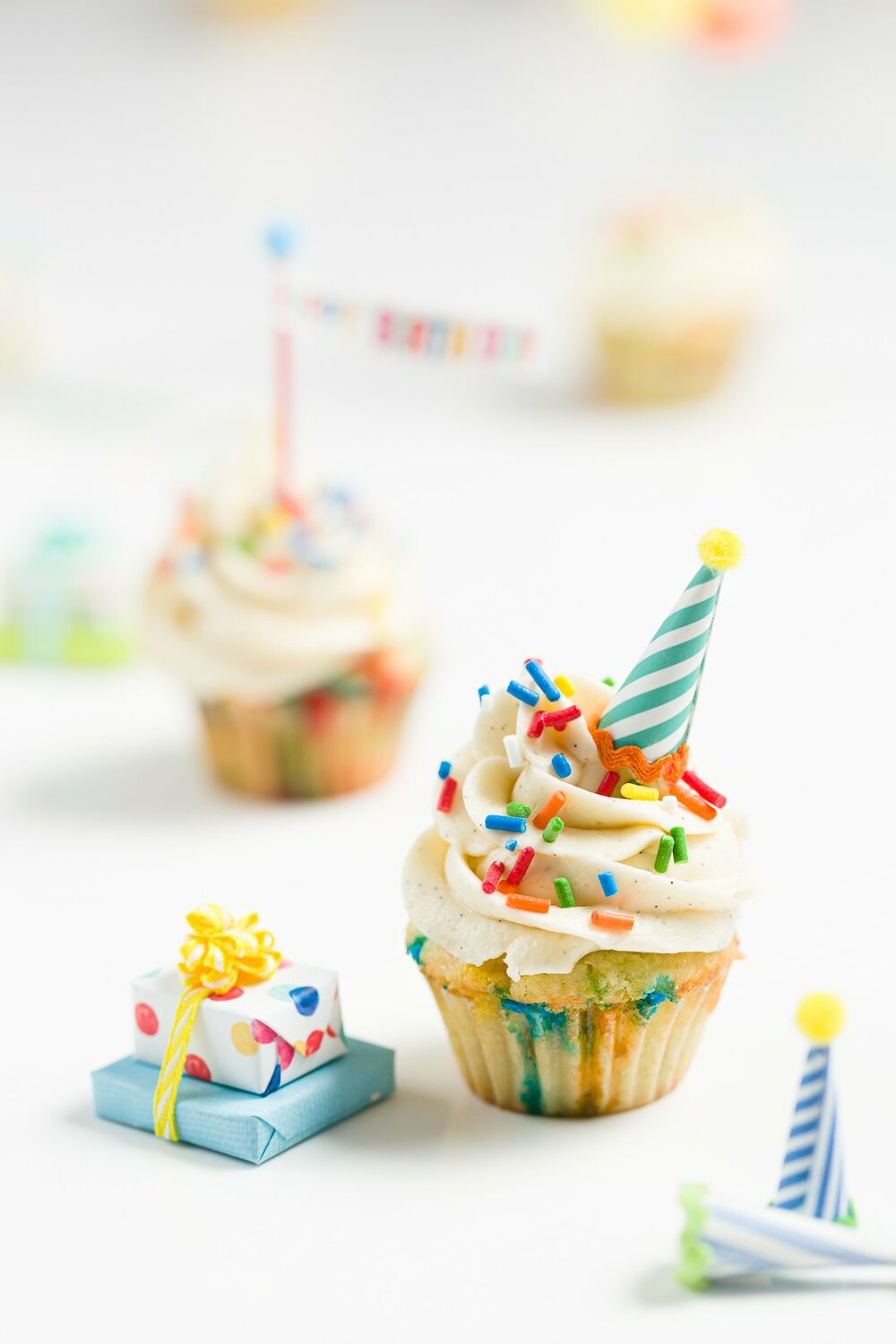
While you don’t need the absolute best equipment to photograph food – I’m using camera equipment that’s a decade old! – you do need to think about how your choice of lighting, exposure, and even camera equipment affect your photo.
Placing your dish with natural light to the side and behind generally yields great results, but it’s also not consistent or reproducible; a passing cloud or thunderstorm can suddenly destroy all of your styling and composition efforts.
If you’re working on taking photos over the span of a few hours and you want them all to look similar, I highly recommend that you use artificial light of some sort. Most food photos I’ve taken indoors are photographed using flashes with diffusion from behind or off to the side of the food. I use reflectors to bounce some light back to the front of the dish, if needed.
If you’re working within a budget, consider getting inexpensive work lights and putting white linens between the lights and your food.

Learn how to use the exposure triangle whether you’re using natural or artificial lighting, and start setting everything on your camera manually. Aim to blur out your background while keeping the foreground nice and sharply focused. And, of course, make sure everything is lit just right.
Equipment for food photography
The best camera equipment in the world won’t help if you haven’t learned what to do with it. I always advise people to start by renting equipment or buying cheap, used gear.
To start off, I recommend a tripod, a camera body that supports detachable lenses, and a medium zoom lens. I encourage you to learn to shoot and edit RAW photos, as you can adjust far more in post-production with them than you can with JPEG images.
If you’re ready to move on from your basic camera setup, I recommend you buy color calibration equipment and lighting. And when you feel confident that you have a good understanding of all of the gear you have and you feel that your current gear is holding you back, finally commit to a full-frame camera system and professional lenses.
Food photography techniques: conclusion
What food photography techniques have worked for you? What techniques have been problematic? Please let me know in the comments!



Some Older Comments