
A Guest Post by Kim Wilson

Travel photos can be inspiring with sweeping landscapes, aerial flyovers and perfectly manicured hotels and resorts, making you want to book your travel plans right now. It’s like looking through a window and you imagine yourself standing right where the photographer stood.
I love capturing the essence of a place and, in fact, people tell me time and again that’s what they like most about my travel photos. While you can certainly get a sense of place from magnificent vistas, regionally identifiable architecture, and closeups of intriguing objects unique to the area, it’s people that best convey the heart, soul and cultural essence of a country.
In the picture above, I wanted to show people in their everyday lives walking along this quaint and quiet canal in Burano, Italy at sunset. I have similar images with no people but this one has energy and movement, creating a more robust portraiture of the small and picturesque village.
Without people in your travel photography you’re missing the location’s humanity. Sometimes the clothes, expressions and environment of your subjects can say more about a place than anything else.

For instance, these two boys are from Rocinha, the largest favela in Rio de Janiero, Brazil. They are happy and enjoying a moment with a tourist from the United States. It creates a much different emotion in the viewer than the other images I have of the famous slum’s ramshackle and haphazard homes sprawling up the mountainside.
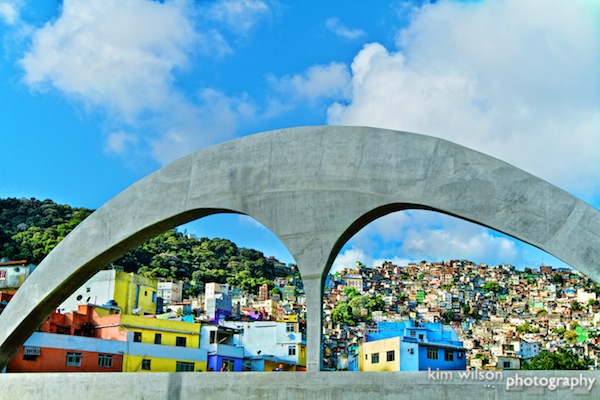
From a distance, you might think living conditions would be horrible. However, in this favela they have drinkable water, plumbing, electricity, satellite and even free WiFi, they just have to buy an antenna. The children run up and down steep steps, creating their own entertainment. Yes, they are poor but you sense a pulsating and vibrant life in the eyes of Rochina’s children.
In this case, our tour guide informed us the children wanted their picture taken and often that happens. Sometimes we think people won’t want to be photographed but you’d be surprised. If you act suspicious like you are sneaking around trying to take someone’s picture anonymously they might shy away or look in the other direction. Go ahead and ask permission, the worst they can do is say no and you move on.
If language is a barrier, use your hands to sign toward your camera and then point at them. It’s a rather universal gesture for “I’d like to take your picture”. I would recommend you be more engaging and make a connection with the person. Find out how to say, “I want to take your picture” in their language. People always appreciate it when you attempt to communicate this way and are more likely to open up. Show them the picture you took. Just smiling and laughing, even when you can’t speak with each other, can be a terrific way to engage, and even make friends, with someone in another country. Sometimes they will then want to pose for more. When possible, exchange cards or contact info so you can send them a copy of the image.

Maybe you are a street photographer and like to just capture the moment such as the image with two people waiting at an Argentina bus stop. I was on a bus and snapped it when we stopped. Some situations are just there for you such as this crazy, four piece band on the streets of Paris.

I used to avoid shooting people for a couple of reasons. One, I knew there were legal issues when trying to sell images with people and two, I wasn’t bold enough to ask permission unless it was a “gimme” like the previous examples.
It’s important that you do know about the legalities of people pictures and where you can use them. Model releases are required if you plan on selling them for commercial purposes or placing them with a stock agency. Moreover, if you are planning on selling your travel photos for stock you have a greater change of selling them with people.
Some agencies accept editorial images, which don’t require a model release. However, editorial images should be relevant to a news story, event, person, or otherwise timely in some fashion. Generally, you can’t shoot an obvious stock image, such as a woman drinking coffee at a Paris bistro with the Eiffel Tower in the background, and submit it as an editorial image just because you don’t have a model release.

When in Venice, you know you’re going to have that iconic image of your Gondolier, so go ahead and ask for a model release, which I have for this shot. Just a hint, the younger ones are more apt to sign them because they want the fare. The old guys are traditionalists and don’t seem to want your business quite as bad.

Travel with friends and family. It’s a lot easier to get model release from them. Pose them in those shots that tell a story about a location, such as this image in the neighborhood of Santa Teresa in Rio de Janiero well known for their cable cars, known as a bonde, that wind through its narrow streets.
Even if you aren’t interested in placing your images with a stock agency, having a model release can protect you and be a real asset if it’s ever asked for from a prominent magazine or photo contest that requires them. With our litigious society, you may just want to protect yourself with that extra bit of insurance. Carrying around a pad of model releases can be a real pain but there are now iPhone apps (Easy Release and VM Release) that generate digital releases. Most (not all) stock agencies now accept them and I should think they’d be good for any other requests. As the saying goes, better safe than sorry.
As photographers, we are the observers of the world around us. It’s through our imagery we communicate with other people. Yes, people like to see pictures of majestic views, expansive cityscapes, immaculate lodgings, and well-served food but ultimately we connect with other people. We relate to the human condition emotionally and sympathetically, far more than we do places and things, as interesting as they may be. Adding people to your travel photography will tell a human story that engages and emotionally connects the viewer to your photograph on a deeper level.
Kim Wilson, based in Los Angeles, CA, specializes in travel, fine art, lifestyle and product photography. You can see her portfolio and find all her contact information at www.kwphotog.com. Kim developed CAPTURE – an instructional photo blog that examines single photographs from concept through post-processing, which is accessible from her website. She also occasionally contributes to Shutterbug magazine and other publications.
Table of contents
Travel Photography
- GENERAL
- PREPARATION
- LIGHTING
- COMPOSITION
- The Importance of People in your Travel Photos
- GEAR
- ADVANCED GUIDES
- POST-PROCESSING
- BUSINESS
- INSPIRATION




Some Older Comments