Picking A Waterfall Shutter Speed For The Best Look
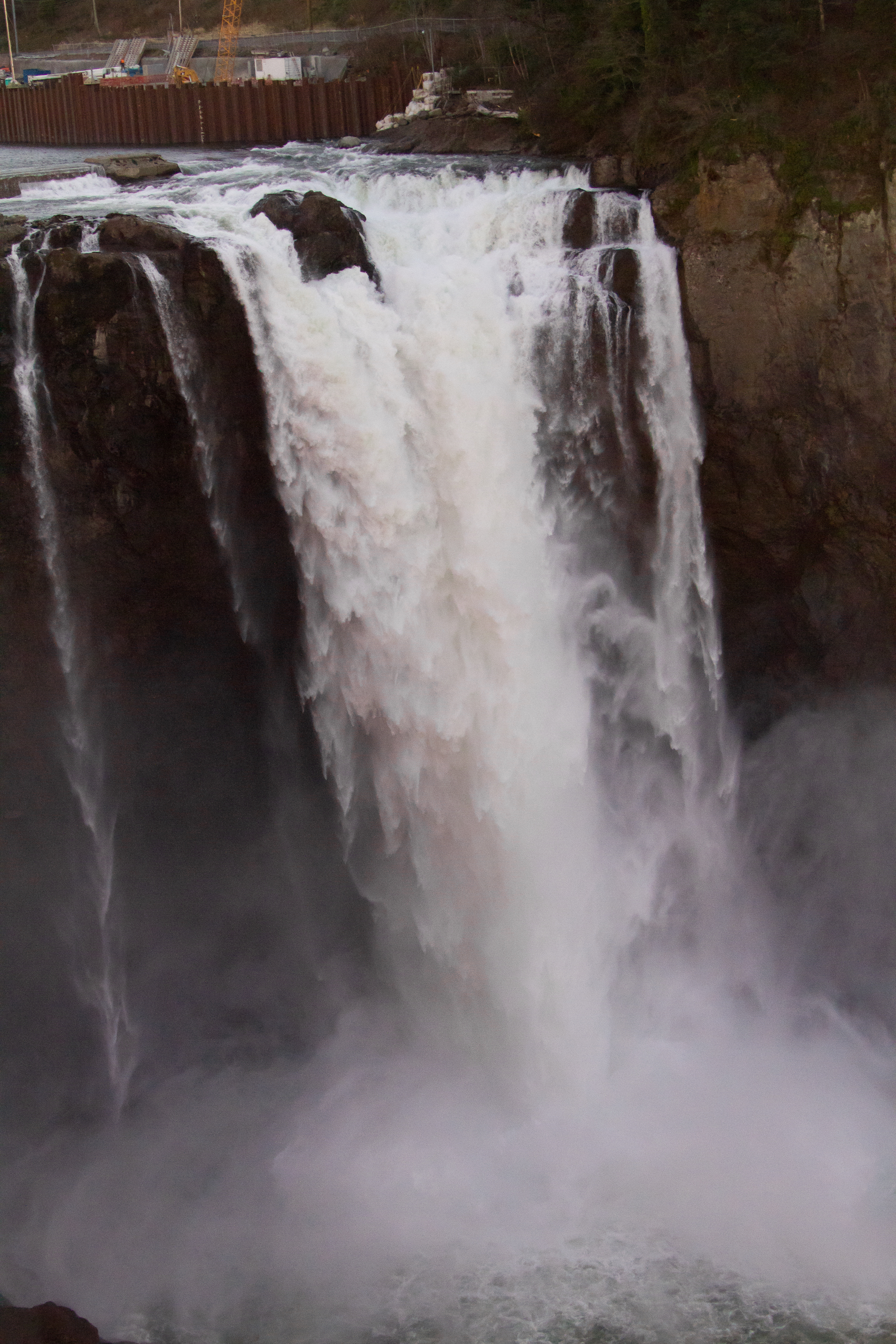
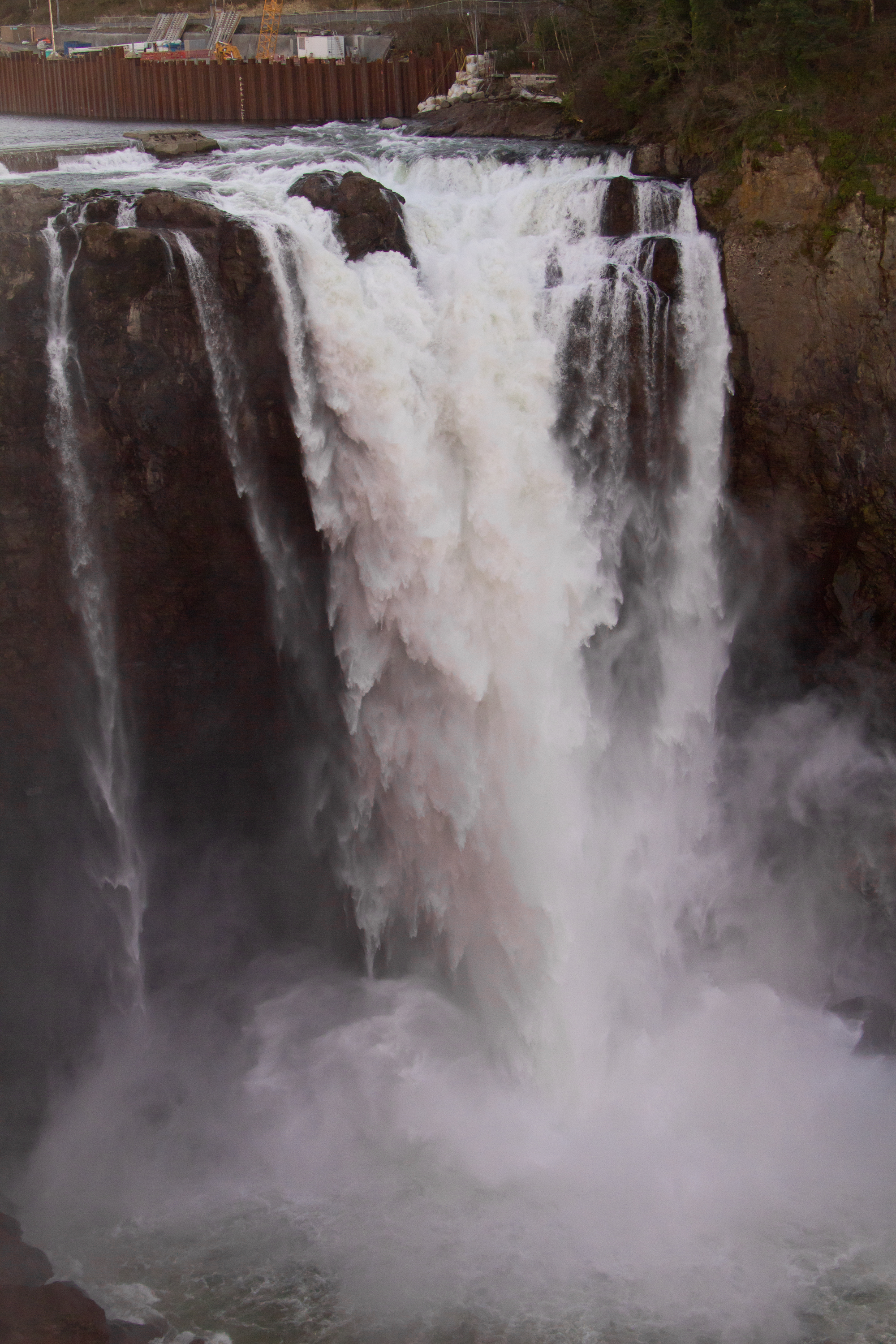
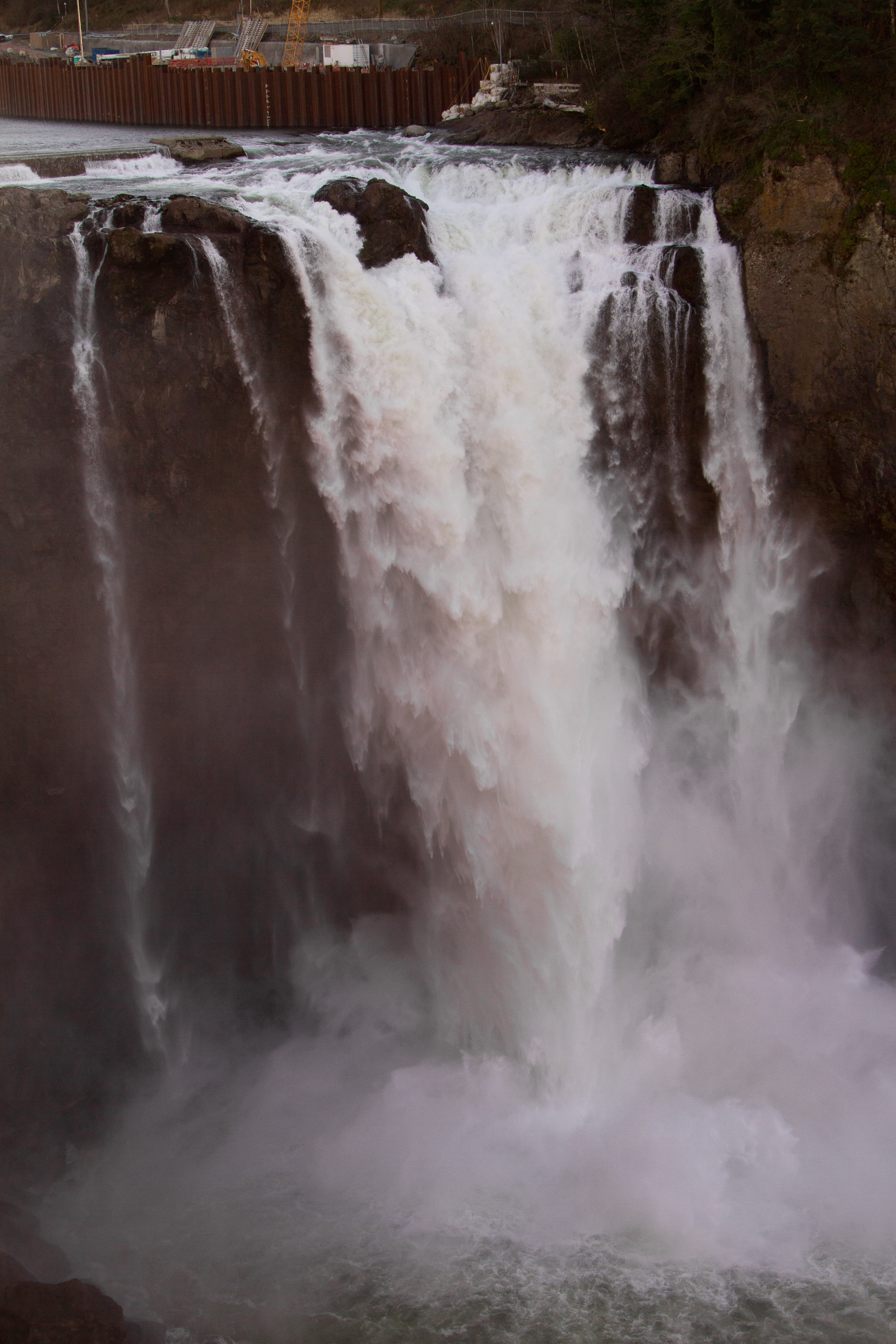
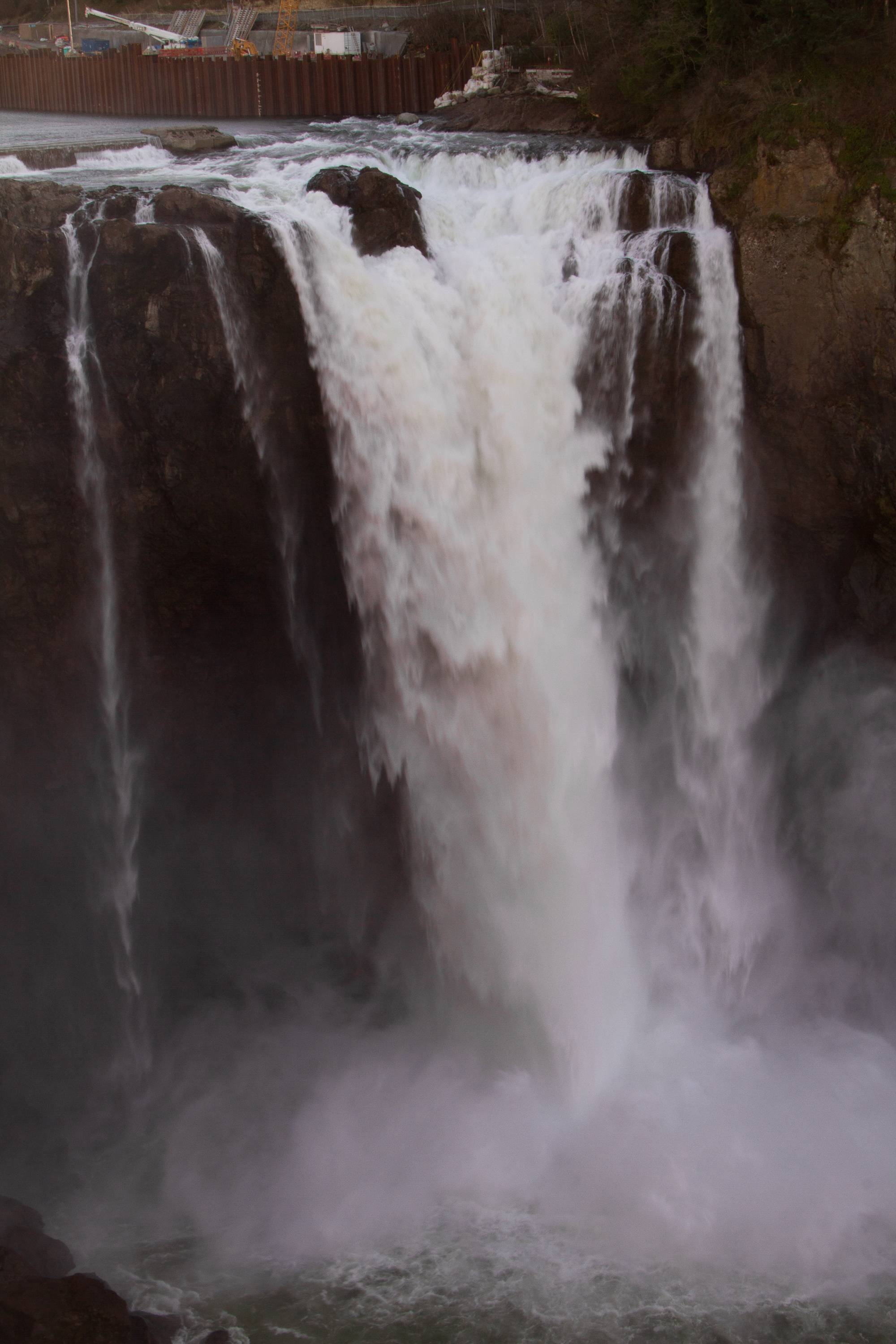
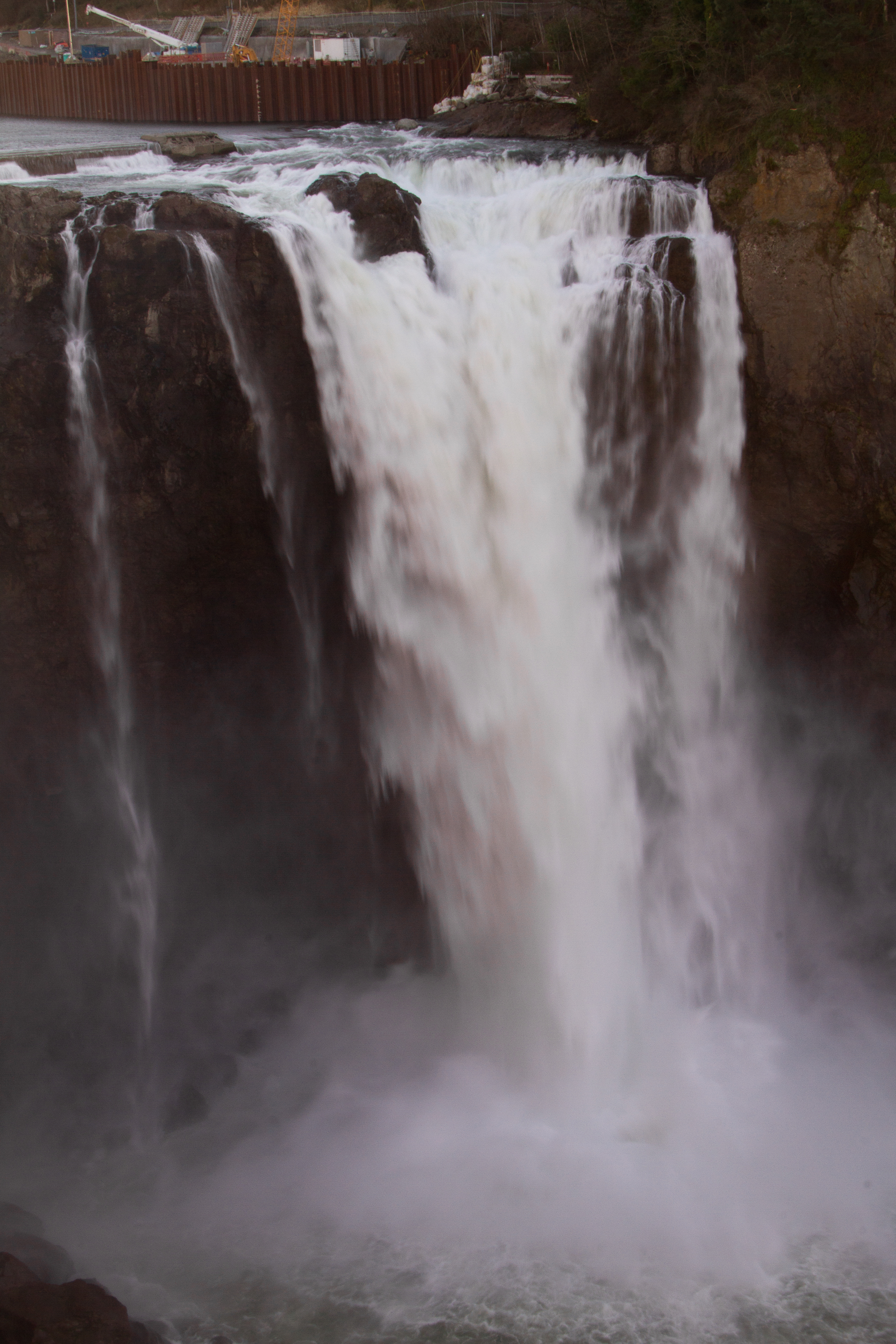
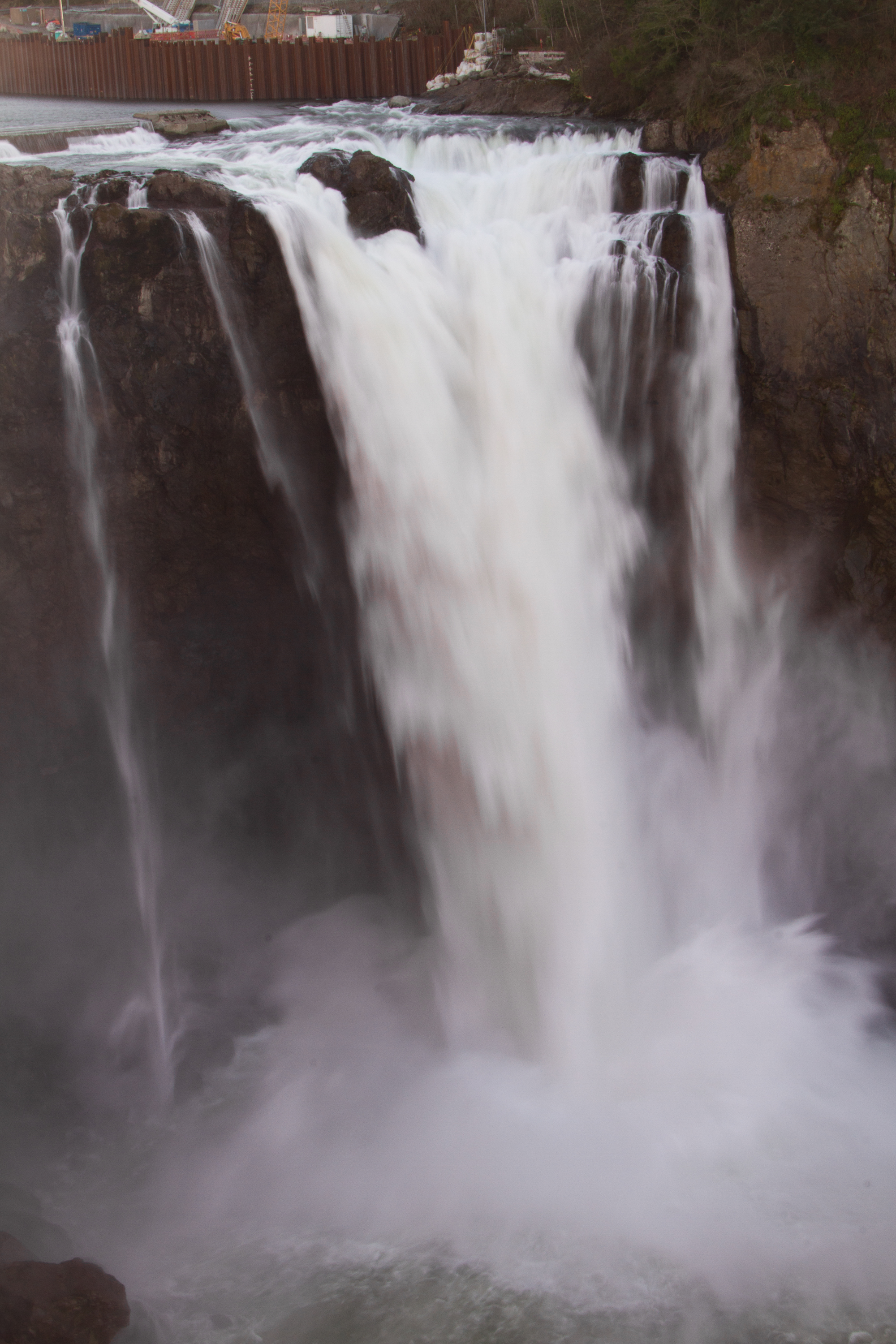
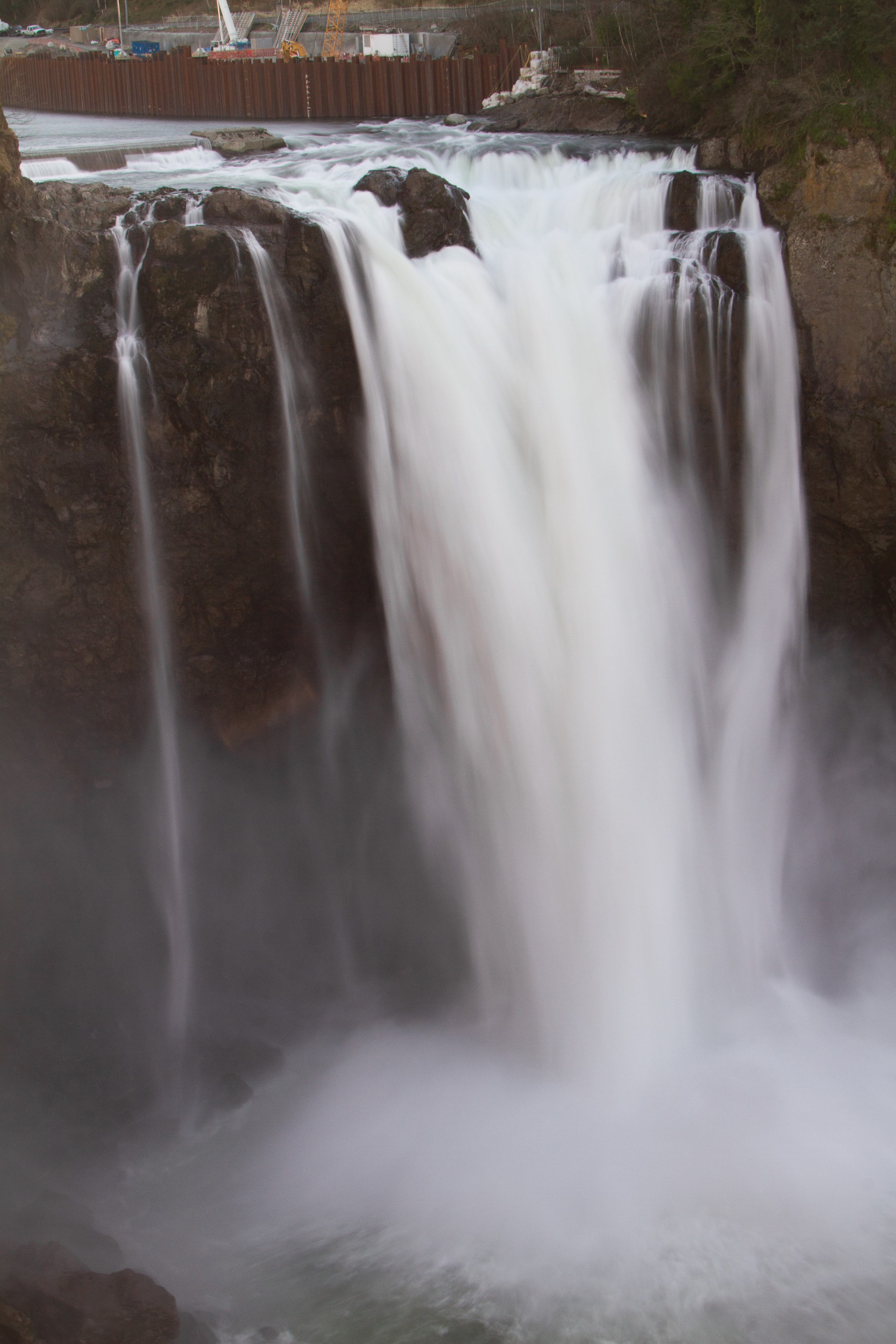
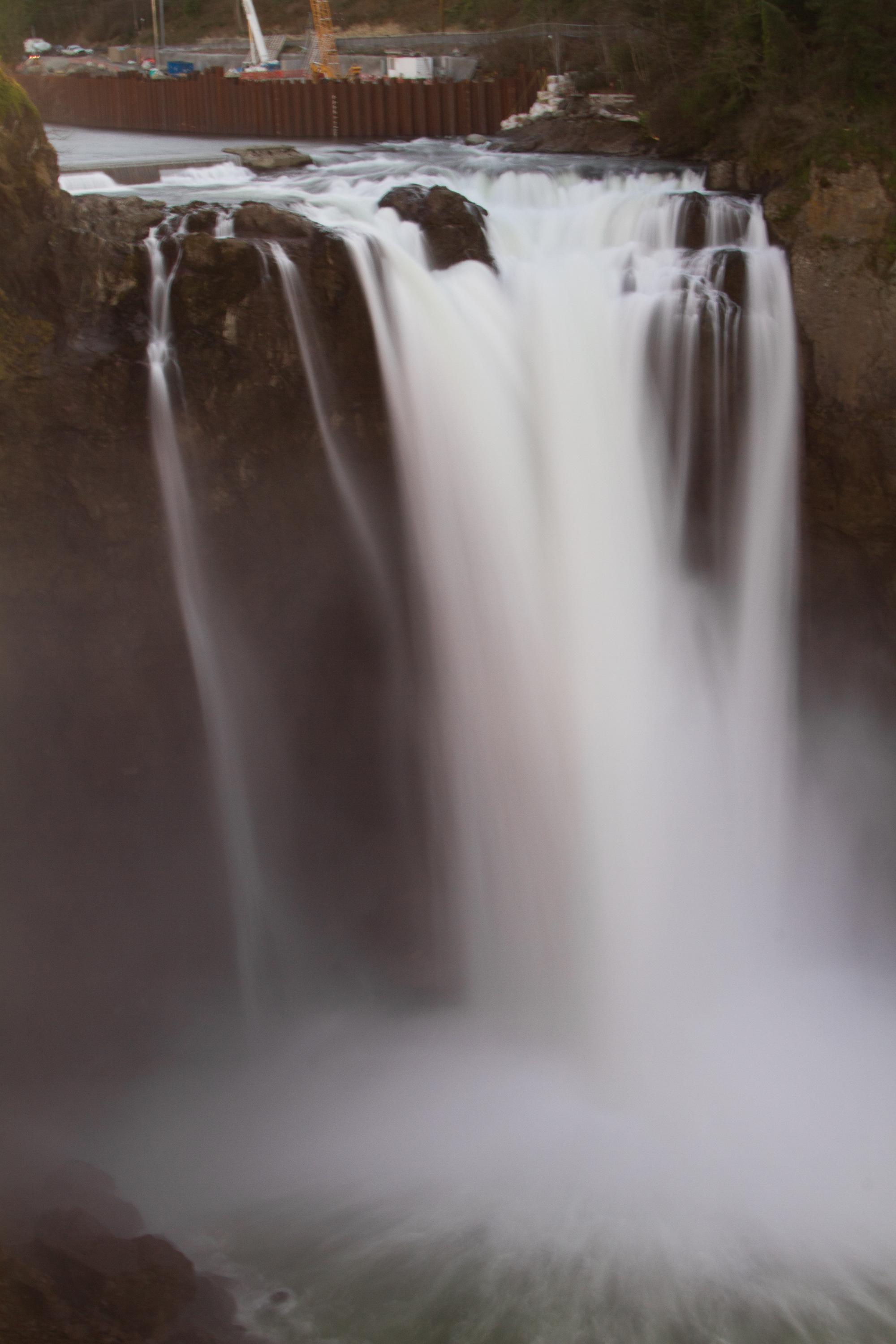
Capturing a waterfall is a matter of personal taste. This post will not tell you you should always use shutter speed 1/X and life will be fine. To the contrary, this post is meant to show some examples of what different shutter speeds do to a moderately distant waterfall so you can decide for yourself which effect is to your liking.
The images in this series were shot at Snoqualmie Falls in Washington state on a very blustery day. The flow over the fall was moderate to heavy and that is an important factor in shooting any waterfall: if there flow is light (low volume) then the effect will be different. A moderate flow means the water has enough volume to pick up speed toward the bottom without fanning out and drifting off as mist. A very heavy flow often means a lack of definition for individual ribbons. Moderation, again, is typically the key, but not an absolute.
That being said, I ran a test at a moderate to heavy flow shooting at 1/8000, 1/3200, 1/1000, 1/250, 1/100, 1/30, 1/20, 1/10, 1/5, .5, 1 and 2.5 seconds. Not everyone has a chance to get out and shoot waterfalls as often as some of us can (evidently the middle of the USA is fairly flat) and this post is for them. It’s a chance to get an idea of what effect happens with which shutter speed. It’s a chance to practice mentally for that trip to Hawaii and its hundreds of waterfalls. Or Costa Rica. Or some place warm with ample rainfall.
If you already have your waterfall shooting data dialed in, great. There is no need for you to read any further. Might I suggest you check out the latest Dilbert cartoon?
For everyone curious about how these shutter speed show up in images of falling water, let’s take a look!
The first few shots are taken with a high ISO as the falls were in shade (the sun doesn’t get very high around here in the Winter). I have used a bit of noise reduction but not so much as to take away from the detail. All images were shot with a Canon 7D and 28-300mm L lens. Clicking on an image will bring up a 3000px tall version if you want to dig a bit closer. I apologize that the 2.5 second image is a bit less stable….it was hard to hold the camera steady with a constant 20MPH wind in my face. The shots at 1/5 and slower were shot using a variable neutral density filter to achieve the slower speed.
What do you see in the falling water at different speeds? I see an obvious change in the silkiness of the water but it takes a while to get started from 1/8000th (and is my main reason for not shooting every stop or 1/3 of a stop as the images in between have very little noticeable change). My normal favorite shooting speed of 1/10th of a second doesn’t cut it here, in my opinion. The water is blurred, but not enough for my liking. Again, that is just my opinion.
What’s your take on a ‘good’ speed to shoot this waterfall? How will the images help you see possibilities differently the next time you are shooting a waterfall?





46 Responses to “Picking A Waterfall Shutter Speed For The Best Look” - Add Yours
February 12th, 2012 at 12:25 am
I will be honest and I have not given it much thought but I do like the milky effect but I once got to click a frozen waterfall and I loved it. It is second pic from the bottom of the post in a small village in the Indian Himalayas.
http://blogs.gonomad.com/traveltalesfromindia/2006/01/travelling-to-bhamour-hadsar-and-half-way-to-mani-mahesh-in-himanchal-pradesh-india.html
February 12th, 2012 at 12:34 am
I love waterfalls, the smaller the better I personally find. This was shot at f11 for 1/2 second.
I’ll have to dig out some more and get them up on my blog.
http://wp.me/p268wp-z
Mike.
February 12th, 2012 at 12:38 am
I feel like with waterfall shots there is no “magic number” for shutter speed. Sometimes with larger flows like the one you shot above I like to showcase the power with a faster shutter speed rather then to blur the water together.
There aren’t many large falls in my immediate area, but after hurricane Irene came through last fall the small falls were flowing faster than they would be in a rainy spring!
http://www.phogropathy.com/trap-falls-again/
In this shot I used 1/20th of a second to blur the water slightly, but capture the power of the flow at the same time.
While I’m sure I could have gone longer on the shutter there’s something about the way the water was blurred with this shot that was pleasing to me.
Again it’s really all about the mood I’m in and what I’m looking to capture.
February 12th, 2012 at 1:55 am
I have a great tutorial on Yanik’s Photo School that can help you guys out as well.
http://yanikphotoschool.com/tips/10-steps-to-perfect-waterfall-shots/
Hope this helps!
February 12th, 2012 at 2:11 am
i have not taken pictures of water falls.
But i could not find pictures of water falls in many photography websites.
When it comes to nature people stick on to flora and fauna!
February 12th, 2012 at 2:24 am
I’ve found I have to adjust my shutter speed depending on how long it takes the water to flow through the frame. If I’m a ways back looking at a high waterfall like your example I like a shutter speed of a few seconds to let the water travel far enough across the frame to blur. If I’m close to a small cascade in a stream it may only take a half second to get the effect I’m wanting.
I like the 2.5 second exposure best in this example.
February 12th, 2012 at 2:32 am
I’m lucky as we have lots of waterfalls in Colorado to practice on. A neutral density filter seems to be key more often than not if achieving the beautiful milky effect. This is my favorite shot without one on a sunny day:http://m.flickr.com/#/photos/nyconti/6034507016/
February 12th, 2012 at 3:00 am
I love taking pictures of flowing water, but have never set up multiple times. I am going to have to do that. Snoqualmie Falls (pictured above i believe) is not easy to shoot due to the volume of water. During flood stage when its absolutely raging will yield some epic shots if the mist doesn’t soak your lens first. Thanks for the great shots and the good idea.
February 12th, 2012 at 3:08 am
Funny how my eyes kept wandering up to the fence and clutter at the top of the image when I looked at the 2.5 sec exposure. I like the milky effect at 2.5 sec but it might be too much blur in this case. The 1/5th sec image looks good for my taste. It tells the story without making your eyes wander to the distractions elsewhere in the frame.
February 12th, 2012 at 3:16 am
Excellent post. The best example is Niagra Falls. A 2 second exposure will be white. I shoot in Arkansas, which means smaller falls.
Another factor is distance to the subject. When shooting close up, I lke to get the “Angel Hair” effect, which is usually around 1/15.
Thanks for posting.
February 12th, 2012 at 7:33 am
As a complete amateur, I found this article to be wonderfully helpful. Just wish I’d read it last week before I got the chance to take some waterfall pictures. Now I can only hope to remember the advice for next time.
Thanks.
February 12th, 2012 at 7:35 am
Thank you for this execellent article! The article provides a technical opportunity to view, study and compare/contrast 12 different examples of shutter speeds and their effect on the exposue
.All this from the comfort of ones home. Since each photo has an appeal all its own, when one is out in the field,this can be a mental reference of shutter speed’s impact on the resulting photos,and also reducing a shootgun approach to picture taking
So many photography articles, when discussing the “how to’s”. …of improving techique, fail to provide visual examples which illustrates the concepts being addressed.
February 12th, 2012 at 8:48 am
The longer the better imo.
30 seconds…
http://www.flickr.com/photos/22176685@N07/6160028139/in/set-72157627714590096
February 12th, 2012 at 4:08 pm
I agree with Jim ^ but to each their own.
Great article.
Here’s my 13 second exposure:
http://www.flickr.com/photos/albertshu/6414341309/in/photostream
February 12th, 2012 at 5:43 pm
Did you take these last week? I was there last Saturday and have some pics from almost this same angle, and noticed a pro shooting a few feet away.
Either way, great article!
February 13th, 2012 at 1:05 am
Waterfalls are something I love to take pictures of. I live in the flat southern portion of Minnesota, but there are plenty of waterfalls to the North of me, and there is even one right in Minneapolis.
I like to mix it up, myself. I enjoy the effect of freezing the water, and taking long exposures to get that silky look Peter showed off in the 1 and 2.5 second shots. And in between.
For example:
http://www.flickr.com/photos/jvstin/6069165498/
versus
http://www.flickr.com/photos/jvstin/4599705211/
versus
http://www.flickr.com/photos/jvstin/3850689990/
February 13th, 2012 at 1:41 am
To me it would be either all or nothing.
So either “freeze” it with 1/500s or below.
Or “smooth” it with .5 or slower.
Everything in between to me just looks acccidentially blurred.
February 13th, 2012 at 3:11 am
It all depends whether you want to portrait the waterfall as “smooth and silky” (which it is not, in this particular case) or raging and moving great masses of water.
I did some waterfalls shots in upstate New York. In my opinion, “smooth and silky” (2-10 sec) works better on small, cascading falls to convey their serenity and 1/25-1/100 works better on grand scale falls to make then raging and choppy.
February 13th, 2012 at 3:58 am
It is the ideal combination of silkiness and motion that matters. Very long exposures tend to kill the water flow (in vertical falls, it is not a big problem as the viewer ‘imagines’ the flow), but on more flat flows, you need to imply that. Very short, of course, will not be gorgeous. Here is my attempt on a very short ‘fall’
http://domesticatedonion.net/photos/2010/04/spencer-gorge/
February 14th, 2012 at 2:17 am
I like the first and last photos the best. I think the stop action of the water in the first and the silky smoothness of the last one really show the waterfall as two sides to the same coin. I think our eyes and brains see both as one when we see it live.
February 14th, 2012 at 6:17 am
One of my brothers like to take photos of waterfalls. I’m sure the settings he uses vary. He does take multiple photos because the water and the rocks need different settings and then he combines the two he likes best.
February 14th, 2012 at 10:53 am
Well put advice on shooting moving water.
http://www.flickr.com/photos/lendog64/4725235118/
February 15th, 2012 at 10:45 am
Of the above, I think I like the one shot at 1/1000th most.
For me, it’s either extreme: the one at 1/1000th has frozen the motion but retained contrast (perhaps a lower ISO was required in the available light, or the light changed between frames?). At the other end, going for broke with about 2s gives a pleasant flow – but critically, I think the milky-brushed-chrome effect requires a different composition, where the primary understanding changes from “it’s water” to “it’s an area of silver in the frame”. Hence, while I’m fine & happy with long exposures of waterfalls (and have done enough in my time), I don’t think it would be as good a choice in this case as the sharp frozen-motion one.
February 17th, 2012 at 2:05 am
Very useful, I think I am swinging back to a more frozen effect from the super silky ones I used to take so often. Thanks for the reminder to try a faster shutter speed sometimes.
February 17th, 2012 at 2:53 am
No lack of respect intended as your talent is huge; .but, I have “hated” the total blurring of moving water ever since it has become de rigor. Must be my old camping out so much, but i love the variations in the water action as it moves along or down.
thus your shots at 1/100 and around that speed are, to me, awesome. Paticularly if tickled a little for tone and contrast .. or, many of the variations that so many are capable of providing to day.
No question different strokes ….
Thank you for the info – provided a lot I have wondered about and no opportunity ot explore so thoroughly.
February 17th, 2012 at 3:15 am
If the water is clear, the sun is bright and you can get very close to a small water fall a very fast shutter speed that ‘freezes’ the motion of the drops, etc can give a very dramatic look to the photo. Otherwise, the long exposure ribbons are nice.
February 17th, 2012 at 3:44 am
Not only was I looking at the water falling over the sold mass, but also at the surrounding scenery that can either add or distract from the from the waterfall movement itself. I agree that anything above 5 sec. is not pleasing to the eye. I selected the 5 sec, after reviewing the higher shutter speeds. However, the 1 sec and 2.5 sec possess a beautiful bottom splash that brings a beauty to the waterfalls.
February 17th, 2012 at 4:16 am
Very interesting look at shutter speeds and waterfalls. I would like to know if you let the camera choose the aperature setting or did you meter it?
Thanks
February 17th, 2012 at 5:53 am
I find the 1/1000th the most striking in this example. I agree with John (3rd post), it depends on the particular flow of the waterfall. In this example I don’t feel that the 1/1000th is frozen, it conveys a stronger sense of power as there is motion and scale. I always enjoy your posts Peter.
February 17th, 2012 at 6:32 am
This series of shots provides lots of food for thought. There’s lots of material here to ponder and room for personal tastes. My favorite is th e.5 sec shot. In my opinion, it has a nice ethereal quality, but isn’t over done. Personally, if I were to set for such a shot I would choose a number of exposure settings for review and decide later what looks best to me. I don’t think that there’s a one size fits all answer.
February 17th, 2012 at 6:37 am
All good Ideas/comments above.
As much as personal preferences go, to me it all depends on what else is in the frame: in this case, an ugly fence and a construction site, so the falls is truly the only thing to look at. If you can see the river above and/or below, with greenery, rocks, colour, maybe your opinion changes.
I obviously don’t have one particular stop:
http://www.flickr.com/search/?w=10212406%40N06&q=waterfalls&m=text
I think I started with loving the longer exposure, but then, a lot of these shots can lurch into “Thomas Kincaid” territory (not that there’s anything wrong with that). Like bad HDR, blown out whites are blown out whites, regardless if the rest of the pic is bad. And unless you have a non-windy day, all that movement in the foliage distracts.
I’ll agree with Ed Law: that, or maybe the 1/30 appears to be a nice balance. Movement, some silkiness, but the full power of the falls works here. Maybe with a smaller flow it wouldn’t.
Thanks for a great article, and yes, it has given me something to think about.
February 17th, 2012 at 7:23 am
Waterfalls are always a challenge and quite fun when deciding to capture/stop the motion or to move to the more ethereal feel by slowing down the motion. In the examples you have shown I favor the .5 sec exposure as slower is not quite as pleasing to my eye. I would like to see these same examples when you can shoot them with more light and the same filter system.
Really enjoy your posts and comments as much as I enjoy your work.
Thank you!
February 17th, 2012 at 8:03 am
A good article to point out how to get the type of effect you want. I believe it all depends on the “story” you want your photo to tell. My favourites are the 1/1000 and the 2.5. To me the 1/1000 “roars” with energy, whereas the 2.5 “whispers” with serenity. Having taken shots similar to this myself, I can say that “freezing” the shot with a shorter shutter speed works great with large volumes of water, whereas longer shutter speeds make longer, narrower ribbons of water look otherworldly.
February 17th, 2012 at 8:28 am
For Snoqualmie, I thnk the shorter exposure is better. The spray at the bottom just obscures and the falling water begins to look like a wad of cotton. I cannot see the power or the falls in the longer exposures here (and I know Snoqualmie). In other falls, especially if the stones and setting are interesting, a smooth, silky long exposure is more appealing. Sometimes, the same falls can be striking shot either way. Light and wind do matter for tall falls. I have a personal preference for shorter exposures exhibiting the multitude of angles of spray unless the trees and rocks are just as important as the water itself (usually in a flatter, shorter falls). Tradeoffs either way, of course.
February 18th, 2012 at 1:21 am
The trick in this and nearly any other photography that might break a “rule”, is to make it look intentional. If you want it sharp, shoot a high enough shutter speed to make it sharp. If you want the silkiness, shoot slow enough that it doesn’t look like a mistake. If you go half-way, it just looks like a blurry photo.
February 18th, 2012 at 2:30 pm
hi,
this photography learning tips is very useful. from the above example of four picture how the way to take picture in different shutter speed in one waterfall time position in one camera?
February 18th, 2012 at 4:56 pm
I am really beginning to love taking water shots. This is one of my fav’s so far but still learning.
It was f22 and .8 seconds. Didn’t have much time between rain showers to get to try too many other settings.
]http://www.flickr.com/photos/76831153@N03/6891057171/
February 19th, 2012 at 1:30 am
I personally like the 1/100 sec exposure, I like the blend of ‘silkiness’ and ‘detail’ which to me is very powerful in this photo, also, the detail of the water/splash at the bottom of falls is a perfect combination in my minds eye.
February 19th, 2012 at 6:03 am
I agree with the saying of it’s personnel taste. As for myself, I usually go with the silky appearance of long exposures. There are times though, like when a spray or flow is back lit, that I prefer a faster speed to freeze the action. As far as exposure times, it depends on the flow. For waterfalls around me, I find that 2 – 3 seconds is about perfect for my taste. Of course there are exceptions.
I have almost 50 photos of waterfalls from Ricketts Glen State Park in PA., at this link. If you go to it, the caption says how tall each of the falls are, and if you click on the photo info button on the right, it’ll tell you the settings used for each shot. Not saying they are the perfect shots but it’ll give you an idea on the results to expect. On this day, the flow was moderate.
http://s37.photobucket.com/albums/e100/cheveyo45/Ricketts%20Glen%20State%20Park/
February 19th, 2012 at 5:51 pm
Hi Guys! I live in Jacksonville, FL and we surely don’t have any waterfalls down here. One time, when we went to Lego Land (yes, a theme park near Orlando) I saw this beautiful landscaped area with falls! Yeah, this is man-made but nevertheless I got to practice playing with the shutter speeds to get the look I want. This shot was taken using a Canon 7D with 24-105 mm L series lens with a 10x ND filter at ISO 200, 15 sec shutter speed.
http://www.facebook.com/photo.php?fbid=10150329642222607&set=a.376618147606.156099.655387606&type=3&theater/img
February 20th, 2012 at 2:44 am
I love waterfalls also. Thanks for these shots. I took this picture (http://smu.gs/wwl35f) of a small waterfall (about 1′ high) in the woods behind our house with various exposures. I preferred this one with a 1s shutter speed.
February 20th, 2012 at 12:47 pm
Nice job Brian, great composition. 1s shutter speed looks just about right.
February 21st, 2012 at 2:06 am
One obvious thing is the amount of mist rising from the bottom of the fall. I think that must be taken into account as well as the slow shutterspeed allows for more mist to show in the picture which then blurs the detail where the water is falling. In my view the 1/30th of a second provides overall detail. Fast flowing waterfalls provide for a silky look already due to the white water showing as in the example so the silkyness should not be that prominant. My 2 cents worth
February 21st, 2012 at 12:41 pm
^ Colin … I totally agree, I didn’t want to get into detail but 1s is at the absolute limit for me, especially if white water area’s are limited. Why take a perfectly exposed photo with sharp detail throughout and make the water look airbrushed/photoshoped. “Beauty is in the eye of the beholder” LOL
May 15th, 2012 at 1:32 pm
Have you ever considered about adding a little bit more than just your articles? I mean, what you say is important and everything. However think about if you added some great graphics or videos to give your posts more, “pop”! Your content is excellent but with pics and videos, this website could certainly be one of the very best in its field. Fantastic blog!
July 29th, 2012 at 6:15 am
I had the exact reaction to the 1/20th sec. shot. Every other shot is pleasing in its own way and either the beauty of the water frozen in its falling or the silky smoothness, and probably the slower the shot, the better.
This was exactly what I was googling for, btw, in seeing a series of shutter speeds. Thanks a bunch for putting it up!
-Terry
Leave a Reply